Danish, Scandinavian, Nordic – Why the Words Matter (Especially in Your Home)
Every few weeks, someone in Sydney will tell me, “Oh, I LOVE Scandinavian style – I want my home to feel really Nordic and Danish.” And my little designer brain goes: “Amazing… but those are three quite different words.”
In everyday conversation, people often use Danish, Scandinavian, and Nordic as if they mean the same thing – pale timber, white walls, a bit of linen, and a nice armchair in the corner of a(ny) room. But behind those labels sit real places, real histories, and quite different design traditions. And when you’re investing in a renovation or a full-home design, those differences aren’t just linguistic – they shape how your home looks, feel, and age.
So, in this (very hyggelige) December blog, I thought I’d unpack what those words actually mean, why I’m quite fussy about them (and why you should be too), and what is specifically at the heart of Danish design – the lens I bring into homes across Sydney, the Central Coast, and Newcastle.
Geography Lesson 1o1
I want to start with the basic geography - because it explains, to an extend, the difference when we talk about these terms in relation to design. And yes, the language can be confusing – even for most Europeans:
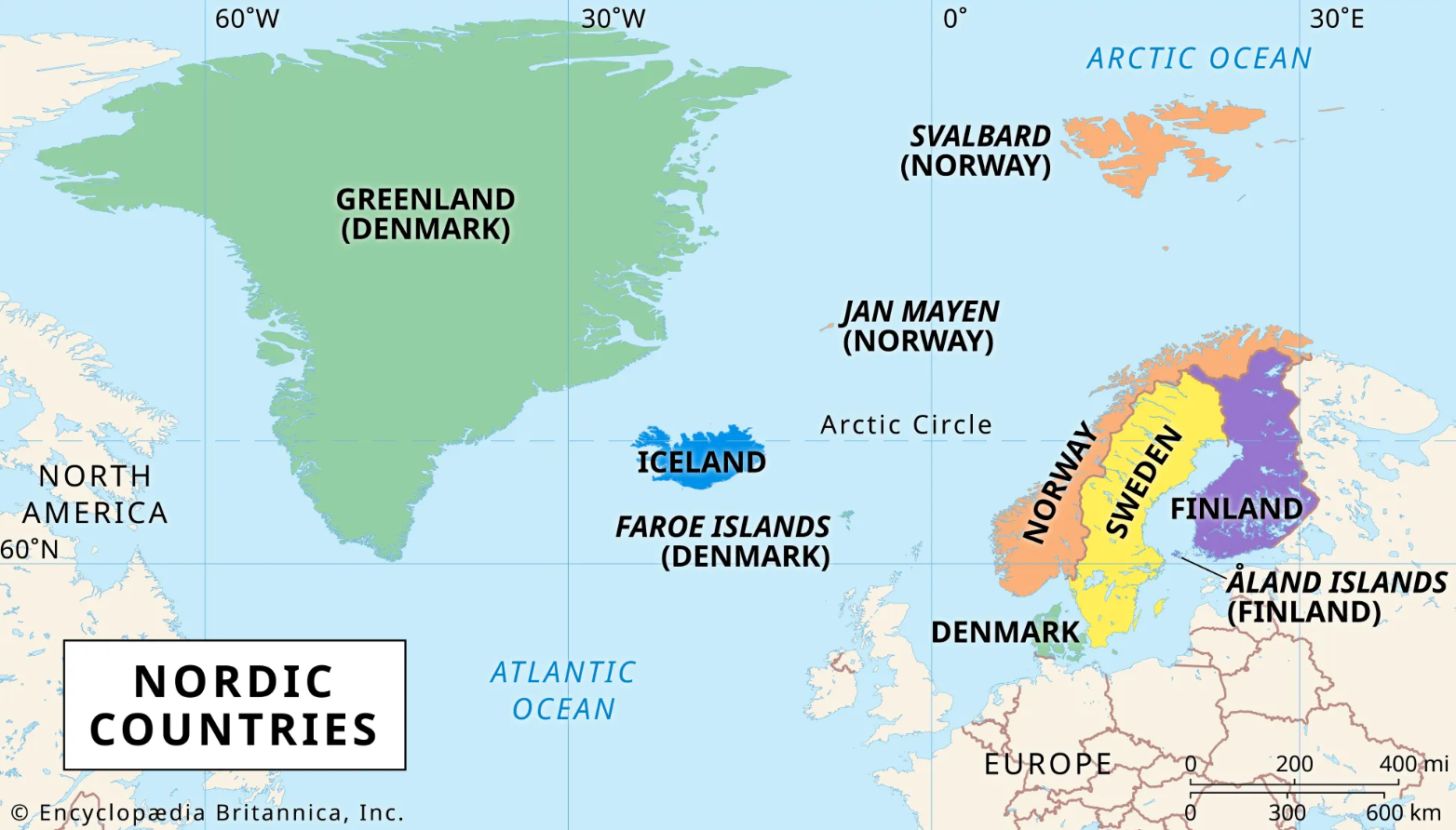
Map of the Nordic Countries from Britanica Encyclopedia
Nordic is the big family - think extended cousins, you only see at ‘special family gatherings’. When people say ‘Nordic countries’, they’re usually talking about Denmark, Norway, Sweden, Finland, and Iceland, PLUS territories like Greenland and the Faroe Islands.
Scandinavia is a smaller group, let’s say your siblings in the family (because yes, there’s LOTS of sibling rivalry between us). ‘Scandinavia’ usually refers to Denmark, Norway, and Sweden – countries that share a long history, cultural ties, and related languages. Now, the confusion probably comes from people talking about the ‘Scandinavian welfare model’, which in reality also includes the Finnish model, even though Finland isn’t commonly referred to as a ‘Scandinavian country’, confusing, I know?!
Danish is just one sibling in that broader family. Danish design refers specifically to what has come out of Denmark – our designers, architects, makers, and the everyday ways Danes live and think about their homes. Which, surprisingly, is different from the other Nordic countries.
So yes, all Danish design is technically Scandinavian and Nordic. And all Scandinavian countries are Nordic. But not all Nordic design is Scandinavian, and not all Scandinavian design is Danish (promise there’s no quiz at the end).
For you as a homeowner, these words are really a shorthand for mood, palette, and priorities. A ‘Nordic-inspired’ scheme might pull from broader northern landscapes and bolder textiles. ‘Scandinavian’ is often a global umbrella term for calm, simple, functional interiors, and ‘Danish” is more specific again: warm minimalism, human-centric spaces and a quiet obsession with how things actually feel in daily use.
How it Relates to Design Talks
Now that you understand the ‘geography’ a little better (I hope, at least), let’s talk about these concepts in relation to design. As mentioned, globally, Scandinavian design has become a kind of shorthand for uncluttered rooms, clean lines, natural materials, and functional furniture. It is a useful label, but also a little like saying ‘Mediterranean food’ when you really mean ‘my Italian grandmother’s lasagne.’ Within that broad Scandinavian identity, there are distinct flavours.
Swedish and Norwegian interiors often lean into lightness and airiness, with lots of white and pale timber to bounce precious daylight around long winters. If you’ve been to either country, you’ll notice homes made of timber, which is very different from most Danish homes. Finnish design frequently plays with stronger graphics and textiles; you might think of bold patterns and a confident mix of simplicity and statement moments (if you know Marimekko, you know what I’m talking about).
Danish design, by contrast, tends to step slightly away from graphic boldness and into a calmer, warmer minimalism. It is less about making a dramatic statement and more about creating a space you can live in for decades. There is enormous respect for craftsmanship, human comfort, and long-term use. Objects are designed to be used, not just photographed (my resistance to rugs under your dining table is exactly this - great for my Insta-photos but NOT PRACTICAL!).
In Australia, much of what is sold as “Scandi” captures the surface: white walls, blonde timber, boucle, and some black accents. There is nothing wrong with any of that, but without the underlying thinking, spaces can drift towards a styled display apartment rather than a lived-in home. This is where language becomes useful. When a client tells me, “We’re drawn to Scandinavian style, but especially Danish design,” I instantly know they are looking for something a little warmer and more human – less about fashion, more about feeling.

Sydney Opera House - The most iconic example of Danish design in Australia, aging well and gracefully (photo from RICS.org).
What is at the heart of Danish design?
Whole books and museums are devoted to this question, but in real homes, a few themes show up again and again:
First, function comes before decoration (NO dining rugs…). The starting point is always: what does this need to do for real people, every single day? A chair must be comfortable for a long dinner - this is why you’ll often see armrests on Danish dining chairs. A lamp must give gentle, usable light on a dark afternoon (see my blog post on the PH lamp HERE). A kitchen has to support cooking, lunch boxes, homework, late-night tea – not just a styled photo once a year. Once the function is clear, we refine the ‘simple’ form. That is why many Danish pieces look almost quiet at first glance. Their beauty comes from restraint - less is more!
Second, the minimalism is warm, never cold. I often describe Danish interiors as minimal, but never sterile. Yes, there is usually less clutter. Yes, the lines tend to be clean. But warmth is built in through honest materials – oiled timber, linen, wool, cotton – and through the way spaces invite you to sit, read, chat, and nap. The aim is not a gallery; it is a home you can fully inhabit without constantly being afraid of leaving a mark.
Third, everything is human-centric. Danes spend a lot of time indoors, especially in winter, and that makes us very sensitive to small things: the height of a bench, the depth of a seat, the way a handle feels in your hand, the reach to a light switch. Good design is meant for everyone, not just design enthusiasts. When I work with families here, I am thinking about tired parents, energetic children, ‘dirty’ pets, grandparents with stiff knees – real bodies in real spaces.
Fourth, craftsmanship and longevity matter deeply. Danish design has grown from strong woodworking and craft traditions. There is a culture of doing things properly: joinery that can be repaired and refinished, not replaced. Furniture that can be reupholstered, etc. It is inherently sustainable: instead of “good enough for now,” the mentality is “good for the long term.” That sits very far from fast décor and disposable furniture. And funny enough, it’s so ingrained in me that I rarely talk about sustainability. Because it’s subconsciously a part of my design process.
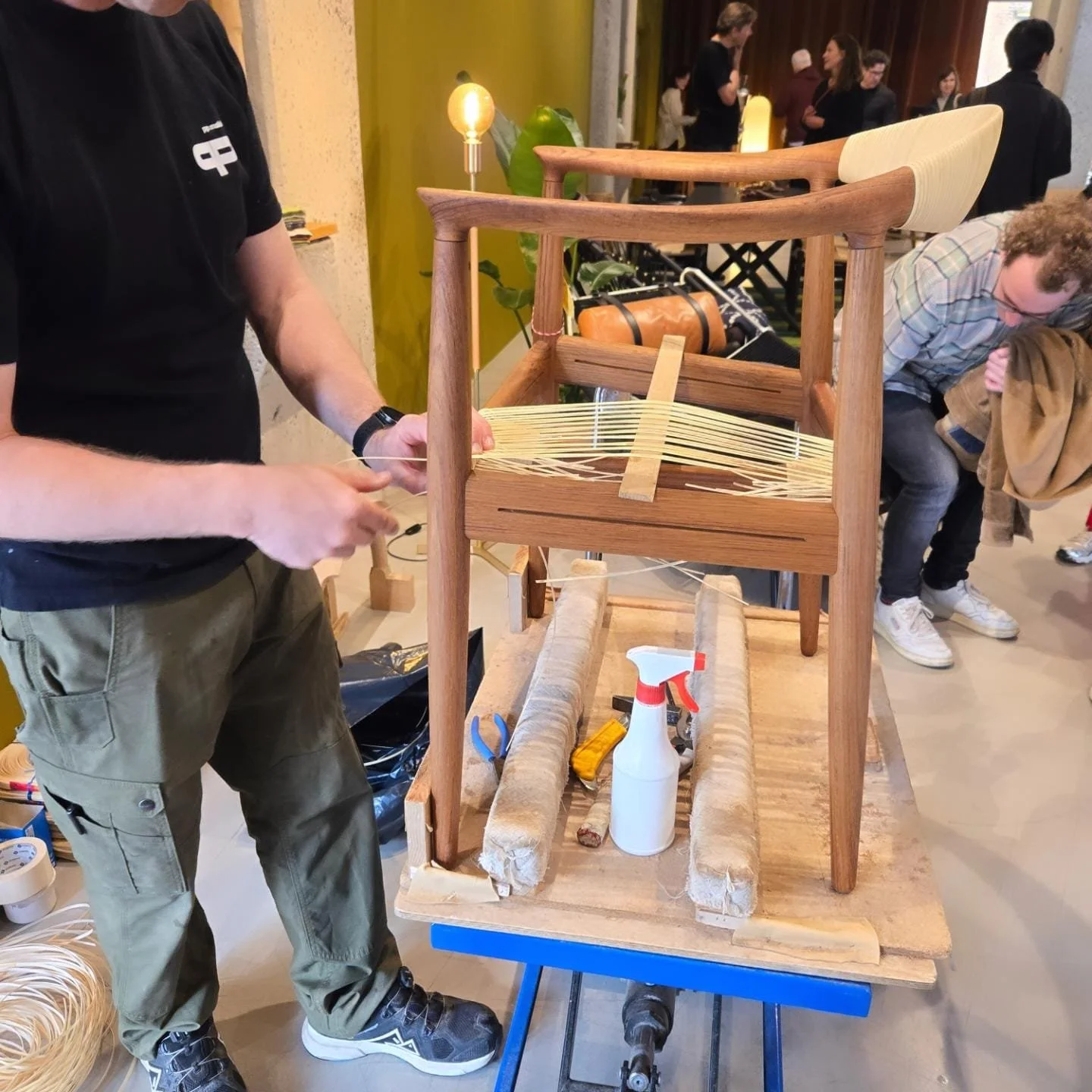
Danish craftsmanship at PP Møbler at 3 Days of Design in Copenhagen
What it Means for Your Home
Don’t worry. You do not need to throw everything out and start again to lean into Danish design principles. In fact, the opposite is true - because Danish design NEVER simply throws everything out for the sake of it. Small shifts can change the whole mood of a room. Start by asking yourself how you want to feel when you walk through the door. Many of my clients use words like ‘calm’ and ‘warm’. The words you use become a great ‘filter’ for design decisions. Does this colour, this sofa, this rug move you closer to those feelings, or away from them?
Lighting is a great example. If you say you want calm lighting, choosing warm yellow tones (lower Kelvin) is the best choice. And if your home relies entirely on downlights, you are missing out on a huge part of hygge. Bringing in one or two soft, diffused lamps in each main space can immediately make a room feel more Danish.
Materials are another good example. Ask yourself whether the materials around you will still feel beautiful in ten years. Natural timber, high quality textiles, and well-made joinery tend to age gracefully; synthetic finishes do not. And, do you really want to breathe in those synthetic fibres on a daily basis? You do not need to be purist, but being more conscious here can make a big difference over time.
Finally, consider one small ritual that matters in your household and design for it. Just this week, I visited a client for a one-off consultation and noticed she had a sewing machine shoved in a corner. “Do you like to sew?”, I asked. “The girls [her daughters] do”, she replied. “In that case, I’d suggest extending your custom office desk, so you can have your work area by the window and a dedicated sewing space next to it. If the sewing machine isn’t easy to access, no one wants to sew”. She smiled, “great idea. You’re absolutely right”. So think about what you love doing in your home and design spaces for it - THAT’S Danish design!
My End-Of-Year-Note for You
As I write this, my family in Denmark is lighting candles in the afternoon gloom and pulling blankets up around their shoulders. Here in Sydney, the sun is sharp and long, and we are thinking about sunscreen and how to keep the pavlova from collapsing. The seasons could not be more different, but the heart of Danish design travels well between hemispheres: create spaces that support your real life, choose things that will live with you for a long time, and let your home express who you are rather than what the algorithm suggests.
If you are sitting somewhere between ‘Scandi,’ ‘Nordic, ’ and ‘Danish’ and aren’t quite sure what that means for your renovation, that is exactly the kind of conversation I love to have. My job is to translate those big words into a home that actually works for you – here, in this climate, with your family and your way of living. And whatever label you end up using, my wish for your home this December and beyond is simple: that it feels like a place where you can exhale, gather, and quietly think, ‘Yes. This feels like me.’
Happy Holidays,
Nadia